Yes, more Doom musings to go through the day. You should probably be aware of the classic Doom WADs that many people still go back to these days. The 2000s for instances has the timeless classics of Scythe and Alien Vendetta, while the 90s had Requiem, the Memento Mori wads, Eternal Doom, and the subject of this post, Hell Revealed.
What is Hell Revealed exactly? It's a wad with a simple story, you are a Doom marine, you end up in a megawad by two sadistic WAD creators, and you just kill what you have to kill. And that's basically the story, as the two authors of Hell Revealed knew there's not much story in the classic Doom games to go by. It's funny in a few ways, because it describes a "visible status bar" along with a "pistol and 50 bullets" as if they expect every player to actually believe you'd wake up with that stuff on you. And then you start playing the levels of Hell Revealed, and the thing to take notice as to why this particular megawad is so (in)famous is its apparent difficulty. Hell Revealed is highly accredited with being a pinnacle to the "slaughterfest" WAD genre.
Said slaughterfests that came after Hell Revealed did many things different than what the originals did today, offering larger monster hordes, forced arena fights, better detail, and these are basically the things that Hell Revealed itself fell flat on. You're not gonna find good examples of detail in Hell Revealed, because even the best detailed maps don't go far from the traditional Doom IWAD architectures. There are quite a few instances of monster hordes in Hell Revealed, but they all differ and many of them were done significantly better in future wads. In most cases, like the middle maps, the areas are all open so the monsters have free-roaming and that basically is the gist of the monster hordes for the most part. Other cases cause monsters to just be behind cages, or in particular perches, the kind of stuff that proves the turret tropes that followed this WAD. The WAD definitely is hard, there is no questioning this fact, but the gameplay isn't as comfy as it may have been back in the day.
I'm not sure where to really start on how poorly Hell Revealed aged, but a map that comes to mind is one of the usual least favorites, MAP07.
Yeah, it's certainly innovative in what it is. A mostly open arena in the shape of a spider and sure enough, every enemy is an arachnotron. Neat for its time, but it doesn't hold up later on since all you're doing in the map is super shotgunning every arachnotron, getting on the step, and fighting a (completely optional) spider mastermind. That's literally the whole level and it's a fine example of something that did not hold up well.
I guess a few other maps do the concepts well for their time, but there are more interesting things to do in the wad than some might think. The optional rooms in Top Hell (MAP28), especially the reverse Tricks and Traps room, were quite funny back then, but are pretty meh now. The layouts of Core Infection (MAP05), and Great Halls of Fire (MAP12) featuring lots of orthogonal walls, something that I've seen people continuously frown open for reasons. Great Halls of Fire even features a weird super shotgun room where you can apparently practice your super shotgun shells on individual barons one at a time. Too bad in this day and age, you can just get the gun, leave, then come back and fight them all at once for a more fun challenge. Mostly Harmful (MAP32) does its course as an evil slaughtermap, but it compounds it by an easily accessible exit and complete symmetry.
Gates of Hell (MAP15) has one of the better concepts, going to different sections while fighting off slaughter-like setpieces in each one. The Hell knights and barons on the walls are kinda lame though. And then there's this silly little level...
Yep, that's Everything Dies, a map where you are given everything and must basically make do with it. A quick and dirty level. But it also follows a very egregious level and one of the more infamous ones...
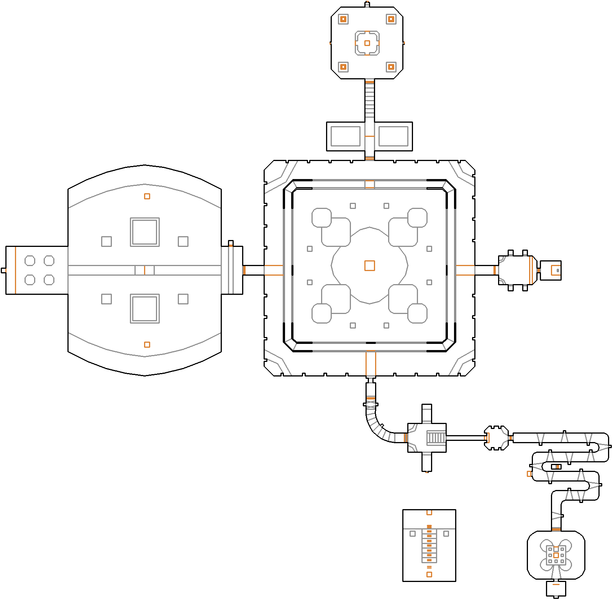
Hard Attack (MAP18), one of the nastier levels, as if the cyberdemon at the start is more than enough to prove that point. The paranoia of this one lost soul who keeps perpetually teleporting and making it seem like there's always more, being surrounded with chaingunners upon getting a super shotgun, a weird winding hallway containing a secret with some strange teleporting enemies and that's just the beginning. The headaches of getting onto the ring walkway around the center arena rear their ugly head as you basically fight off mostly revenants along with other monsters that can't stop using the damn lift. The inside arena has the nasty arch-vile trap once you collect the BFG, not to mention the monsters already present inside, and outside. The side areas to the north and west with the teleportation gimmick to the north, and the spiderdemon criss cross to the west, are poignant. The room with reserve arch-viles for the cages, and one last nasty trick summarize this one. It's oddly one of the nastier levels in the entire wad, but it brings me to a notable point.
For those of you who play this on lower settings, you may find certain parts a lot harder than on Ultra-Violence, and this level is a blatant example. On Hurt Me Plenty, the western section replaces the spiderdemons with arch-viles, impossible to dodge in that open space and even harder to hit given how small they are. There's a few other instances of arch-viles replacing bigger enemies, such as in MAP31, but this is the one that makes me think that certain difficulties were somehow made harder than Ultra-Violence.
So these particular maps I mentioned are pretty memorable for the most part, but for all the reasons that make it rather nasty to replay over and over again. MAP18 in particular. The good maps are definitely good maps, including the standout slaughtermaps, stuff like MAP14, MAP22, and MAP24 hold up, and MAP26 has lots of memorabilia to it. However, all of Hell Revealed's creative children beat it in many ways, and there's no denying that. So much that its legacy got ripped for the better wads itself.
Even though it's quite sad that Hell Revealed is easily surpassed, one thing remains. It was a megawad by speedrunners for speedrunners. No wonder the WAD is one of the Compet-N WADs and also the one with the most attempted runs on it on DSDA. Casual players, however, are more concerned with fighting hordes strategically, but also nitpicking on the problems that Hell Revealed had.
Sunday, March 1, 2020
Saturday, February 29, 2020
A look back at: Seiken Densetsu 3
I often wonder just how did the Mana series become such a cult classic? The gameplay for action RPG-style stuff is more unique than others before and after it, and the games are usually pretty good in terms of how much you have to endure before you decide to go on a grinding segment or so.
Wouldn't say the same thing for Seiken Densetsu 3, now known as Trials of Mana. Before that remake of Sword of Mana came by Seiken Densetsu 3 gave us the utilization of class changes, and even said it was a mechanic in-game. The battle system was more in-line, allowing for actual waiting periods. Although sometimes in the heat of battle my controlled character gets into it and somehow waits longer. The controls do need some work. There were quite a lot of grinding moments too, but thankfully enemy experience is done well. Still, the way some characters gain new spells, plus the maximum stat gains, and perhaps the worst of all, the enemy item drops (because you need specific ??? seeds in order to get the final class change and you want to get a very specific item for a very specific class) make this one way more trouble than it could be worth. Getting the right classes at the end game made the bosses a cinch though.
The enemy AI is surprisingly smart, making this game one of the harder ones I've actually played. It's enticing to smash enemies with your special moves and magic, but hitting them hard enough will cause them to attack with their own specials, and many can do loads of damage. This makes some areas a pain to grind, especially the full-screen attacks that stop all the action (to be fair, the character's special attacks offer that kinda thing too). Also you can't stop a caster unless you kill it outright, casting is uninterruptible here. Sometimes the game's delayed reactions to things also causes enemies to use their special right upon death. Frustrating moments were had in spades.
With the way the game is set up, they tried for replayability and all, but the grinding wore me out and I'll only play the game once. I can tell they wanted to go for six differing stories, although two characters will inevitably share similar plots and final bosses, not to mention arch-nemeses at times. The game definitely throws curveballs with how specific villains get screwed over depending on who your main character is, while plot-wise, they basically let you do all the hard work then screw you over. Some typical, some not typical. Seiken Densetsu 3 was a game that tried, but mostly managed to be around the same level Secret of Mana was.
Friday, February 14, 2020
A look back at: Silva Saga
Yikes, I'm on a role this Valentines day with two posts in a row. After just finishing the second game in Silva Saga, just titled Silva Saga, what do I look back on? Well, let's see here.
I look back on just how easy this game was. For an NES RPG, that's astounding. For an NES RPG that feels very Dragon Quest-y, its easiness is quite a shock.
I look back at just how linear this game was. Compared to the last game, which was linear but had lots of fetching back and forth between revisited locations, this one was extremely linear, just get a clue from an NPC, do a thing in a dungeon, bam, you're moving on.
I look back at how lame the enemies were, and the lack of challenge in them. Also the level ups and money weren't a problem. The only real problem combat-wise is figuring out if spells will ever be effective against some enemies, which I always hate when there's no effect to using the best spells.
I look back at the weirdness of watching either my fighter or mage party member swap with someone who basically inherits all the stats of the previous. What's the real point? I guess it's a tad cooler than having a party member that sticks with you since the beginning of the game, having a different guy every time. Problem is, character development doesn't really happen in these cases.
I look back at the lack of a plot besides "defeat evil" and the mini plots which are just fetch quests, and how easy they were in comparison to the last game.
Yeah, this is probably a game I don't want to look back to again, although it's because the stuff I look back on doesn't really spark any interest. This game really could have been a good sequel, and it ended up being easy.
Doom Musings: Five great Icon of Sin battles (and five that were terrible)
Hooray, another Doom musings post, and yet another one that is about five things that were good and five that weren't good. So the Icon of Sin, a giant goat face on a wall that shoots spawn cubes that summon enemies non-stop until you shoot its brain out. A fantastic idea, trying to figure out how to get this thing to finally stop shooting and to rid the Earth of the Hell that has taken over. Then with custom WADs which will generally have a final level with dealing with the so-called "boss shooter" new arenas and scenarios were made. This will cover five great Icon of Sin battles and five that were not so great.
Note that this list will cover levels that have Icons of Sin for end bosses. These don't have to be MAP30's, although at the end this list was all MAP30 except for one (oops). This list will not cover any level that doesn't have the Icon of Sin on them.
Great: Icon of Sin (Doom II)
I mean what else should be listed as the first great one? The arena is pretty simple, large, but simple enough to work with what gets thrown at the player. Solving the puzzle to get the platform to rise, then using it and shooting rockets into the brain in order to win, yet you're under constant pressure from monsters as well as the damaging floor below. The famous Romero Head easter egg of course also originated here for those who wish to use no clipping to see it.
Terrible: Last Call (TNT: Evilution)
The torch maze with the voodoo doll instadeath teleporter gimmick is a wonderfully innovative idea. Plus it's the first IWAD map to make use of dummy sectors. It's a shame that much of the level's combat before the boss isn't impressive. It's there in spades, but nothing too amazing. The real kicker is that in most other boss shooters, you aim for the brain. In this one, aiming for the brain won't work, you have to aim below the brain. Although you can do this with any weapon and damage the boss, the counter-intuitive way of actually finishing this level threw off many players, and that's why it is terrible.
Great: The Forgotten God (Revolution!)
Fighting a big goat face has become a staple of Icon of Sin battles. But in Revolution!, we are treated to something that looks much more sinister. It's a big humanoid which functions like a boss shooter, but far cooler. The arena is small and simple, but the ideas present were excellent. A split-second rocket for each round trip in order to damage the thing make this one frantic fight. And the ending afterwards shows what you probably desired.
Terrible: Nucleus (Icarus: Alien Vanguard)
I don't know how three mappers can make an Icon of Sin level seem bad, but here we are. The simple arena has you thinking you must blow some rockets towards the center, but nothing will ever happen. The strategy here was also counter-intuitive, heading into the arena, running along the outside perimeter, then heading back to the south end to find a skull switch and a target to shoot. Even worse, the actual boss is at a far side, requiring the rocket launcher, but the whole thing feels awkward. And the arena looks awkward too!
Great: The Gatewatcher (Plutonia 2)
Thomas Van Der Velden is the mapper to thank for The Forgotten God above, and he is also to thank for this one, The Gatewatcher. Yet another great instance of Icon of Sin art, the goat face this time has more hollow eyes and just feels much more sinister, with the music track Cataclysmic Impact further making the whole thing much more harrowing. Urgency is needed, kill the cyberdemons at the switches, then aim for those hollow eyes. This is truly one of the nastier Icon of Sin fights.
Terrible: Point Dreadful (Alien Vendetta)
For those who play it, you probably only get one shot at defeating the boss shooter, which basically means studying a speedrun tactic used for the original Icon of Sin. Point Dreadful is terrible because the distance between the lowest switch and the lift from which it triggers is too big for the short amount of time to reach it, requiring wall-running, which for those who never got acclimated to it will never be able to reach. And it's not a very impressive Icon of Sin battle visually, just somewhat standard. It's just such a dreadful point to end Alien Vendetta with.
Great: Píča (Kama Sutra)
The fruits of Doomguy's labour in Kama Sutra pay off in this amazingly memorable final map. The beginning has you choosing a path, Kids or Adults? Choosing kids is the lamer option, though it's still difficult as you have to wait for an exit to lower while cyberdemons assault you with rockets. But the Adults route? Yeah, that's the kind of thing every guy's fantasy never would have imagined. Is there really much more to say?
Terrible: Amenthes (Epic 2)
One of the main caveats of the MAP30 slot is that monsters gain the ability to telefrag. Though this doesn't just apply to the player, it applies to other monsters as well, and it works for both spawning enemies and teleporting enemies. So what's the deal with the adventurous Epic 2 and its lame final level? Well it's pretty much segmented setpieces before the boss shooter, and one particular setpiece has you going on rising pillars and shooting a far switch. What happens next is a weird sight, a bunch of enemies teleport onto a teleporter behind you and telefrag each other. And this happens twice. It's so odd that this would happen. And the actual boss shooter itself is honestly underwhelming and easy to beat.
Great: Worlds Collide (Hellbound)
Worlds Collide is a great example of a gauntlet run Icon of Sin, making players go through the first few trials while enemies continue to spawn in the level well before you reach the boss itself. And the settings, like the rest of Hellbound, work wonders for this particular map, with the lava-flooded cities and the dilapidated structures taking huge precedence over the damning landscapes. The swift will be able to win this one, but even the slower players shouldn't have too much trouble as long as they are reasonably quick in figuring out what to do.
Terrible: Release Me (Cleimos 2)
So you run through a bunch of fences while the Icon of Sin spawns stuff, climb some stairs and find the boss sprite to shoot. That's basically it. Not much to say about it. It's too short to be exciting and too lame combat-wise. It's also MAP26, with a few bonus maps appearing in the final slots. Is there really much else to say? Requiem's MAP30 (Nevermore) at least had more meat to deal with before its lame boss.
Honorable mentions:
Hatred (Requiem): The whole level is fantastically tough to this very day for a Requiem map, the Icon of Sin being a somewhat pleasant surprise.
Darkness Without End (Speed of Doom): Speed of Doom was released in 2010, and this final level had 2010 monsters to deal with. It was a survival gauntlet, but an exploit allows you to wait for the pillar to lower without having to worry about fighting a horde of slaughter.
The Verge of Revelation (Whispers of Satan): Whispers of Satan has the settings of Hell done amazingly well, and the buildups to the Icon of Sin are great. The Icon of Sin battle tries to be as innovative as it gets too.
Megiddo (NOVA: The Birth): Five authors create five distinct sections before you get to the final boss. The boss itself isn't as good as it should be though.
In the Eye of the Beholder (Plutonia Revisited: Community Project): As you might expect, Thomas Van Der Velden delivers a unique-looking Icon of Sin in the form of a huge cacodemon. It's just not as memorable as the others.
Dishonorable mentions:
1994 Revisited (Whispers of Satan): Geez, what good does it to wait for the Icon of Sin to get repeatedly crushed by a single switch?
The North Pole (H2H-XMAS): None of the spawned monsters will ever show up in this map.
Nevermore (Requiem): It's a simple yet small arena preceded by a few battles, which actually saves it from being too lame.
Game Over (Going Down): Gotta figure out what to do, then just wait a bit, then let a monster open a door and run for the elevator. Easy.
Note that this list will cover levels that have Icons of Sin for end bosses. These don't have to be MAP30's, although at the end this list was all MAP30 except for one (oops). This list will not cover any level that doesn't have the Icon of Sin on them.
Great: Icon of Sin (Doom II)
I mean what else should be listed as the first great one? The arena is pretty simple, large, but simple enough to work with what gets thrown at the player. Solving the puzzle to get the platform to rise, then using it and shooting rockets into the brain in order to win, yet you're under constant pressure from monsters as well as the damaging floor below. The famous Romero Head easter egg of course also originated here for those who wish to use no clipping to see it.
Terrible: Last Call (TNT: Evilution)
The torch maze with the voodoo doll instadeath teleporter gimmick is a wonderfully innovative idea. Plus it's the first IWAD map to make use of dummy sectors. It's a shame that much of the level's combat before the boss isn't impressive. It's there in spades, but nothing too amazing. The real kicker is that in most other boss shooters, you aim for the brain. In this one, aiming for the brain won't work, you have to aim below the brain. Although you can do this with any weapon and damage the boss, the counter-intuitive way of actually finishing this level threw off many players, and that's why it is terrible.
Great: The Forgotten God (Revolution!)
Fighting a big goat face has become a staple of Icon of Sin battles. But in Revolution!, we are treated to something that looks much more sinister. It's a big humanoid which functions like a boss shooter, but far cooler. The arena is small and simple, but the ideas present were excellent. A split-second rocket for each round trip in order to damage the thing make this one frantic fight. And the ending afterwards shows what you probably desired.
Terrible: Nucleus (Icarus: Alien Vanguard)
I don't know how three mappers can make an Icon of Sin level seem bad, but here we are. The simple arena has you thinking you must blow some rockets towards the center, but nothing will ever happen. The strategy here was also counter-intuitive, heading into the arena, running along the outside perimeter, then heading back to the south end to find a skull switch and a target to shoot. Even worse, the actual boss is at a far side, requiring the rocket launcher, but the whole thing feels awkward. And the arena looks awkward too!
Great: The Gatewatcher (Plutonia 2)
Thomas Van Der Velden is the mapper to thank for The Forgotten God above, and he is also to thank for this one, The Gatewatcher. Yet another great instance of Icon of Sin art, the goat face this time has more hollow eyes and just feels much more sinister, with the music track Cataclysmic Impact further making the whole thing much more harrowing. Urgency is needed, kill the cyberdemons at the switches, then aim for those hollow eyes. This is truly one of the nastier Icon of Sin fights.
Terrible: Point Dreadful (Alien Vendetta)
For those who play it, you probably only get one shot at defeating the boss shooter, which basically means studying a speedrun tactic used for the original Icon of Sin. Point Dreadful is terrible because the distance between the lowest switch and the lift from which it triggers is too big for the short amount of time to reach it, requiring wall-running, which for those who never got acclimated to it will never be able to reach. And it's not a very impressive Icon of Sin battle visually, just somewhat standard. It's just such a dreadful point to end Alien Vendetta with.
Great: Píča (Kama Sutra)
The fruits of Doomguy's labour in Kama Sutra pay off in this amazingly memorable final map. The beginning has you choosing a path, Kids or Adults? Choosing kids is the lamer option, though it's still difficult as you have to wait for an exit to lower while cyberdemons assault you with rockets. But the Adults route? Yeah, that's the kind of thing every guy's fantasy never would have imagined. Is there really much more to say?
Terrible: Amenthes (Epic 2)
One of the main caveats of the MAP30 slot is that monsters gain the ability to telefrag. Though this doesn't just apply to the player, it applies to other monsters as well, and it works for both spawning enemies and teleporting enemies. So what's the deal with the adventurous Epic 2 and its lame final level? Well it's pretty much segmented setpieces before the boss shooter, and one particular setpiece has you going on rising pillars and shooting a far switch. What happens next is a weird sight, a bunch of enemies teleport onto a teleporter behind you and telefrag each other. And this happens twice. It's so odd that this would happen. And the actual boss shooter itself is honestly underwhelming and easy to beat.
Great: Worlds Collide (Hellbound)
Worlds Collide is a great example of a gauntlet run Icon of Sin, making players go through the first few trials while enemies continue to spawn in the level well before you reach the boss itself. And the settings, like the rest of Hellbound, work wonders for this particular map, with the lava-flooded cities and the dilapidated structures taking huge precedence over the damning landscapes. The swift will be able to win this one, but even the slower players shouldn't have too much trouble as long as they are reasonably quick in figuring out what to do.
Terrible: Release Me (Cleimos 2)
So you run through a bunch of fences while the Icon of Sin spawns stuff, climb some stairs and find the boss sprite to shoot. That's basically it. Not much to say about it. It's too short to be exciting and too lame combat-wise. It's also MAP26, with a few bonus maps appearing in the final slots. Is there really much else to say? Requiem's MAP30 (Nevermore) at least had more meat to deal with before its lame boss.
Honorable mentions:
Hatred (Requiem): The whole level is fantastically tough to this very day for a Requiem map, the Icon of Sin being a somewhat pleasant surprise.
Darkness Without End (Speed of Doom): Speed of Doom was released in 2010, and this final level had 2010 monsters to deal with. It was a survival gauntlet, but an exploit allows you to wait for the pillar to lower without having to worry about fighting a horde of slaughter.
The Verge of Revelation (Whispers of Satan): Whispers of Satan has the settings of Hell done amazingly well, and the buildups to the Icon of Sin are great. The Icon of Sin battle tries to be as innovative as it gets too.
Megiddo (NOVA: The Birth): Five authors create five distinct sections before you get to the final boss. The boss itself isn't as good as it should be though.
In the Eye of the Beholder (Plutonia Revisited: Community Project): As you might expect, Thomas Van Der Velden delivers a unique-looking Icon of Sin in the form of a huge cacodemon. It's just not as memorable as the others.
Dishonorable mentions:
1994 Revisited (Whispers of Satan): Geez, what good does it to wait for the Icon of Sin to get repeatedly crushed by a single switch?
The North Pole (H2H-XMAS): None of the spawned monsters will ever show up in this map.
Nevermore (Requiem): It's a simple yet small arena preceded by a few battles, which actually saves it from being too lame.
Game Over (Going Down): Gotta figure out what to do, then just wait a bit, then let a monster open a door and run for the elevator. Easy.
Monday, February 10, 2020
A look back at: Minelvaton Saga: Ragon no Fukkatsu
RPGs in general follow a basic adventure formula, you start out as a lowly hero, usually eventually having a chosen one vibe, then it goes to finding certain key items and passages to get through the entire game from start to finish. And it's the NES games that fit this to a tee, having players go back to previous locales after getting the means to which others need them, and so forth.
Minelvaton Saga feels like an ultimate fetch quest which frankly creates more boredom than excitement. Vague hints from NPCs are vague, they simply say rumors, but like any other RPG cliches, rumors end up true eventually. The lengths to getting those rumors to be true however was quite nasty when it came to this game. Your first quest is simple enough, prove you're the prince. Then go to the next town. And the next, find clues, go through dungeons, go back, go through the same dungeons again, ah! See the problem? It becomes monotonous really quickly. The big issue that combines itself with this is the encounter rate and battle system. Encounter rate follows simple, potentially annoying formula, and battle system is a weird action RPG style thing reminiscent of Hydlide's system, where you run into enemies and damage is given to whomever. Bad!
Yet interestingly enough, you'll likely run into a dungeon you're not supposed to reach yet early on, likely getting your butt kicked in short order. Or you can prevail and get a lot of levels from it. In fact, leveling up in this game becomes an afterthought as you gain levels quickly. Too bad stat gains and armor that you get don't really equal a whole lot of invulnerability though. The game includes separate characters to substitute for a party, which I guess works in a pinch? Plus two extra party members are nice, although they have AI that tries to get away as much as possible for their long range abilities. By the time someone is ready for endgame they have 99 antidotes (for nothing but poison status anyways in this game) 99 medicines, 99 keys (yes, you NEED keys and there are too many locked doors here), and likely 99 of most attack items. And why do you need all this? Cause the game is gonna be an outright marathon during the endgame parts. The entirety of Rabant Castle is a huge maze, then ANOTHER maze with the aptly-named Gorgon's Maze after it, then FOUR tower tours each with a boss and fixed encounters and lots of key doors and dead ends before the naturally confusing final dungeon of the game.
Do yourself a favor and if you wish to play this game by any means use the guides, or you're not gonna even come close. Or just flat out don't play it at all.
Tuesday, February 4, 2020
A look back at: La Pucelle Tactics
Well well well, another Nippon Ichi game. One of the oldest, predating mostly everything else (including Disgaea), but not the Marl Kingdom games. Though interestingly enough the game takes place in the same setting as the Marl Kingdom, but some offshoot called Paprica. The game's gameplay is honestly okay, I know Nippon Ichi's other games have far superior tactical combat systems and they are worth the grinds for, but this one is fairly standard. Almost Shining Force-esque, except 3D, special abilities other than magic, and the ideas of portals to purify. I never bothered with Dark Energy Indexes, they are going up if you leave portals alone or kill your own characters, and while the idea of entering the Dark World is decent enough, you can still replay maps anytime, which sort of mitigates things. Maybe I just didn't want to have as much randomization as Soul Nomad's inspections or Phantom Brave's dungeons. And purifying monsters into recruits is...okay at best? Not entirely all that useful when you get quite a few storyline characters that are always better. Those Chocolat characters for instance, the small cats that are happy-go-lucky and all, make great support characters if properly leveled, as does Monyamonya who has a distinct advantage to only needing two uses of a skill to learn it. Papillon despite being level 1 and a squishy character also has some routinely nice stuff. Then the physical powerhouses of Prier, Homard, Croix, etc. all work out too. The shop mechanic and the survey help the balance of customization just a tad.
The plot is again a strong point, but I personally get tired of the whole romances involved. Prier falls for Croix and Croix ignores her most of the time, echoing the sentiment Squall gave to Rinoa. It's a little better here because Croix doesn't all of a sudden fall for Prier right off the bat. The Eclair/Homard relationship was just sort of there as a beta couple, but doesn't really hit any strides at all other than maybe a snark from Papillon or so. Culotte crushing on Alouette was even worse, especially when we find out who she really was and that Culotte wouldn't even have a chance. As for the main villain, Noir, he's alright. Another one of those "destroy all life" villains, because he is heavily conflicted, having lost his mother, creating a church with lots of publicity, and making sacrifices in humans and demons. Sometimes he's a Sephiroth kinda guy. Sometimes he isn't. And Prier, the main heroine, becomes a demon overlord some time in between this game and Disgaea where she makes multiple appearances in later titles. I'd love to know how (yes I know the re-release tells you all about it, but most people who like the game's company would likely have been confused on the whole thing).
I would say this is one of Nippon Ichi's weaker titles, along with Rhapsody. But then again, these games aren't necessarily weak compared to most others, they're just weak in the Nippon Ichi catalog. Rhapsody placed rather weakly in my overall rankings, and La Pucelle isn't as hot as others, but it's certainly not a terrible game. I'd say ever-so-slightly above average, really.
Saturday, February 1, 2020
Doom Musings: 5 custom monsters that helped their megawads (and 5 that hurt)
So back to the Doom musings. A lot of custom WADs I play do the simple thing, make new maps and just give a different Doom experience. Some offer weird sound effects, new music, or new textures, and some offer some sprite replacements. There is one thing I notice about some high-profile megawads, however, and that is the ones that contain custom monsters. These are more than sprite replacements of course, they have DeHacked scripting that changes the monster behavior so it is different from sprite replacements, and as such they completely change the gameplay dynamic. With all the custom WADs I have played over the years, I have found monsters I thought did a good job of making new balances, and others that have completely overblown them or just made them worse in some way.
What this Doom Musings post is for is to create a ScreenRant-style list showcasing the five best custom monsters that had helped their respective megawads, as well as five worst ones that hurt their respective megawads. Note that I do not add any sort of actual gameplay mod that changes monsters, nor do I have total conversions, since those usually change every single monster aspect along with levels, weapons, etc. These are megawads with levels that are partial conversions, meaning they will have some core Doom aspects still intact, but they have changes to the monsters.
Helped: Arachnorb (Valiant)
Valiant had plenty of custom stuff to distinguish itself as a completely dynamic partial conversion, including changes to the bullet weapon and several new enemies. The one enemy that proved the most diabolical just so happened to be the small bugger known as the Arachnorb. This puppy can be imagined as a mini-plasma-cacodemon of sorts, shooting small streams of plasma at the player while being a floating enemy. What really sells this enemy however is the potential chance it will spawn from a dying arachnotron. This, combined with the abundance of arachnotrons in Valiant as a whole, make this a fun monster at many moments and a frustrating monster at many more.
Hurt: Afrit (Various megawads)
Alright, real talk. The Afrit is overused and much less fun the more we see it. It's a floating fire baron, and assuming we're not counting the numerous ZDoom wads that use it (this includes ZPack), their method of attack will leave players hiding most of the time they're encountered. Basically, in the non-ZDoom wads it is so overly used in (Scythe 2, Resurgence, Deus Vult II, Bloodstain, Survive in Hell) its method of attack is to launch a huge flurry of mancubus fireballs along with revenant fireballs, making this attack lethal even with the highest of health and armor. Deus Vult II's textfile says it best, two of these can take out a cyberdemon without impunity. Scythe 2 popularized the heck out of it, but may have the worst iteration because its health was on par with a spider mastermind, meaning just one of these is trouble alone.
Helped: Alien Guardian (Ancient Aliens)
Alien Drone, whatever you call them, this floating cubic thingie is a great floating monster, being menacing, non-bleeding, and spitting revenant rockets to make it a viable threat. This is offset by its complete glass cannon status; it has low health. With this in mind, the fast-paced combat in Ancient Aliens is a great way to see these things fall quickly. And even better, they have a blast radius upon death, meaning they can work as mobile barrels if you're so strategic in sending them straight to alien hell.
Hurt: Holo-bot (STRAIN)
STRAIN had a very peculiar set of custom enemies to make it one of the weird classics of the 90's Doom era. These enemies may or may not hit their stride at parts, but the Holo-bot is a disappointment. These weird bots look zany as hell and could give the feel of fighting a really nasty sentry. Except they fire with revenant rockets. Revenant rockets that are insanely slow. I can't imagine anyone actually getting hit by these super slow rockets, even the guided ones. This enemy definitely had a lot of potential, even having a spectre variant, but falls short because of its pathetic attack.
Helped: Rocket trooper (Obituary)
Otherwise known as Bazooka Man, or Rocket Zombie, Obituary's rocket trooper is the original glass cannon. It's a simple case of outfitting a zombie with a rocket launcher, and the results end up outright hilarious at the right hands. Sure, they can kill an unsuspecting player easily, especially given Obituary's cramped level layouts which give the rocket trooper a lot of benefit. But that can easily be turned against his poor self if you get him to fire close to a wall, or other enemies. Old, feeble, but still loads of fun, this little guy packed the most dangerous heat any regular zombie could pack, for all around him.
Hurt: Evil Marine (Scythe 2)
Much like the Afrit, the evil marine has seen plenty of uses since its most famous iteration in Scythe 2, being used in Jenesis, Lunatic (sort of), Bloodstain, Resurgence, Mayhem 2018 Purple Edition, and several other less-known sets. But Scythe 2's version is the worst of all of them, because in this megawad the evil marine is about as fast as the players themselves, firing plasma and immediately moving, making him one hell of a howler monkey in combat. Trying to hit this guy without the BFG is one thing altogether, just try dealing with MAP31's secret exit. Bad enough just getting three keys and unlocking three bars, the marines will play the death dance to a tee to interrupt the attempts.
Helped: Annihilator (Eviternity)
With Eviternity being a uniquely-detailed gameplay experience, there were bound to be new changes to the enemy roster. All of the monsters have their respective uses, the nightmare demon being a twice-as-strong and serviceable demon, the astral cacodemon working well as a surprise attacker with mancubus fireballs, and the former captain being essentially the same as its Struggle counterpart more or less. But the crown achievement goes to the Annihilator, bringing a welcome change to the whole "rocket-shooting baron" routine by adding a hitscan attack right after the rocket. This makes it the most formidable of the Eviternity demons, keeping players consistently on their toes as they are to keep this true nasty from blowing them out of the lands and waters.
Hurt: Cybruiser (Valiant and Mayhem 2018 Orange edition)
Rather ironic to reach a custom monster that shares the same sprite as the one above it, but the Cybruiser is here for a different reason than you'd think. It's not because it lacks the hitscan attack the Annihilator had (remember Valiant came before Eviternity), nor is it the fact that it's a rocket-shooting baron. It essentially replaces the spider mastermind, and the only reason is to make it immune to splash damage. While it's okay on the onset, think of what this does to the generally underused spider mastermind. With it replacing the light visor in Valiant, it has become much easier to defeat. So the Cybruiser hurt Valiant by actually hurting another monster's niche.
Helped: Suicide Bomber (Valiant and Mayhem 2018 Purple edition)
Serious Sam is credited for completely overhauling the way an action bomb worked in video games, giving us a man who is half-naked, had bombs attached to his hands, but most hilariously, having no head but still screaming. And of course, appearing in droves every single time. While other action bombs existed in first-person shooters well before the beheaded kamikaze, it was that scream that basically sold the series. That same scream is used in Valiant's suicide bombers. They don't lack heads now, but they still are a major threat, always coming in large groups, and they are admirably volatile. The pacing of Valiant is insane and these boys make it much more insane.
Hurt: Immolator (Mayhem 2018 Purple edition)
One of my biggest issues with custom monsters is just how much it takes to bring them down. Some do well as glass cannons, but they you get this thing and Scythe 2's Afrit with their health matching or nearly matching the spiderdemon. In fact, the immolator is essentially the same thing as an afrit in practice with a spread of mancubus fireballs as its main attack along with the ability to fly. Another way to annoy savvy players is to have a monster shoot during its pain state, completely catching people off guard. Which is what this thing does with revenant rockets should you piss it off. It's one thing to make it a lethal attacker. It's another to make it have boss-like health. And as another icing, it is also immune to splash damage as it replaces the spiderdemon as well.
What this Doom Musings post is for is to create a ScreenRant-style list showcasing the five best custom monsters that had helped their respective megawads, as well as five worst ones that hurt their respective megawads. Note that I do not add any sort of actual gameplay mod that changes monsters, nor do I have total conversions, since those usually change every single monster aspect along with levels, weapons, etc. These are megawads with levels that are partial conversions, meaning they will have some core Doom aspects still intact, but they have changes to the monsters.
Helped: Arachnorb (Valiant)
Valiant had plenty of custom stuff to distinguish itself as a completely dynamic partial conversion, including changes to the bullet weapon and several new enemies. The one enemy that proved the most diabolical just so happened to be the small bugger known as the Arachnorb. This puppy can be imagined as a mini-plasma-cacodemon of sorts, shooting small streams of plasma at the player while being a floating enemy. What really sells this enemy however is the potential chance it will spawn from a dying arachnotron. This, combined with the abundance of arachnotrons in Valiant as a whole, make this a fun monster at many moments and a frustrating monster at many more.
Hurt: Afrit (Various megawads)
Alright, real talk. The Afrit is overused and much less fun the more we see it. It's a floating fire baron, and assuming we're not counting the numerous ZDoom wads that use it (this includes ZPack), their method of attack will leave players hiding most of the time they're encountered. Basically, in the non-ZDoom wads it is so overly used in (Scythe 2, Resurgence, Deus Vult II, Bloodstain, Survive in Hell) its method of attack is to launch a huge flurry of mancubus fireballs along with revenant fireballs, making this attack lethal even with the highest of health and armor. Deus Vult II's textfile says it best, two of these can take out a cyberdemon without impunity. Scythe 2 popularized the heck out of it, but may have the worst iteration because its health was on par with a spider mastermind, meaning just one of these is trouble alone.
Helped: Alien Guardian (Ancient Aliens)
Alien Drone, whatever you call them, this floating cubic thingie is a great floating monster, being menacing, non-bleeding, and spitting revenant rockets to make it a viable threat. This is offset by its complete glass cannon status; it has low health. With this in mind, the fast-paced combat in Ancient Aliens is a great way to see these things fall quickly. And even better, they have a blast radius upon death, meaning they can work as mobile barrels if you're so strategic in sending them straight to alien hell.
Hurt: Holo-bot (STRAIN)
STRAIN had a very peculiar set of custom enemies to make it one of the weird classics of the 90's Doom era. These enemies may or may not hit their stride at parts, but the Holo-bot is a disappointment. These weird bots look zany as hell and could give the feel of fighting a really nasty sentry. Except they fire with revenant rockets. Revenant rockets that are insanely slow. I can't imagine anyone actually getting hit by these super slow rockets, even the guided ones. This enemy definitely had a lot of potential, even having a spectre variant, but falls short because of its pathetic attack.
Helped: Rocket trooper (Obituary)
Otherwise known as Bazooka Man, or Rocket Zombie, Obituary's rocket trooper is the original glass cannon. It's a simple case of outfitting a zombie with a rocket launcher, and the results end up outright hilarious at the right hands. Sure, they can kill an unsuspecting player easily, especially given Obituary's cramped level layouts which give the rocket trooper a lot of benefit. But that can easily be turned against his poor self if you get him to fire close to a wall, or other enemies. Old, feeble, but still loads of fun, this little guy packed the most dangerous heat any regular zombie could pack, for all around him.
Hurt: Evil Marine (Scythe 2)
Much like the Afrit, the evil marine has seen plenty of uses since its most famous iteration in Scythe 2, being used in Jenesis, Lunatic (sort of), Bloodstain, Resurgence, Mayhem 2018 Purple Edition, and several other less-known sets. But Scythe 2's version is the worst of all of them, because in this megawad the evil marine is about as fast as the players themselves, firing plasma and immediately moving, making him one hell of a howler monkey in combat. Trying to hit this guy without the BFG is one thing altogether, just try dealing with MAP31's secret exit. Bad enough just getting three keys and unlocking three bars, the marines will play the death dance to a tee to interrupt the attempts.
Helped: Annihilator (Eviternity)
With Eviternity being a uniquely-detailed gameplay experience, there were bound to be new changes to the enemy roster. All of the monsters have their respective uses, the nightmare demon being a twice-as-strong and serviceable demon, the astral cacodemon working well as a surprise attacker with mancubus fireballs, and the former captain being essentially the same as its Struggle counterpart more or less. But the crown achievement goes to the Annihilator, bringing a welcome change to the whole "rocket-shooting baron" routine by adding a hitscan attack right after the rocket. This makes it the most formidable of the Eviternity demons, keeping players consistently on their toes as they are to keep this true nasty from blowing them out of the lands and waters.
Hurt: Cybruiser (Valiant and Mayhem 2018 Orange edition)
Rather ironic to reach a custom monster that shares the same sprite as the one above it, but the Cybruiser is here for a different reason than you'd think. It's not because it lacks the hitscan attack the Annihilator had (remember Valiant came before Eviternity), nor is it the fact that it's a rocket-shooting baron. It essentially replaces the spider mastermind, and the only reason is to make it immune to splash damage. While it's okay on the onset, think of what this does to the generally underused spider mastermind. With it replacing the light visor in Valiant, it has become much easier to defeat. So the Cybruiser hurt Valiant by actually hurting another monster's niche.
Helped: Suicide Bomber (Valiant and Mayhem 2018 Purple edition)
Serious Sam is credited for completely overhauling the way an action bomb worked in video games, giving us a man who is half-naked, had bombs attached to his hands, but most hilariously, having no head but still screaming. And of course, appearing in droves every single time. While other action bombs existed in first-person shooters well before the beheaded kamikaze, it was that scream that basically sold the series. That same scream is used in Valiant's suicide bombers. They don't lack heads now, but they still are a major threat, always coming in large groups, and they are admirably volatile. The pacing of Valiant is insane and these boys make it much more insane.
Hurt: Immolator (Mayhem 2018 Purple edition)
One of my biggest issues with custom monsters is just how much it takes to bring them down. Some do well as glass cannons, but they you get this thing and Scythe 2's Afrit with their health matching or nearly matching the spiderdemon. In fact, the immolator is essentially the same thing as an afrit in practice with a spread of mancubus fireballs as its main attack along with the ability to fly. Another way to annoy savvy players is to have a monster shoot during its pain state, completely catching people off guard. Which is what this thing does with revenant rockets should you piss it off. It's one thing to make it a lethal attacker. It's another to make it have boss-like health. And as another icing, it is also immune to splash damage as it replaces the spiderdemon as well.
Subscribe to:
Posts (Atom)


